
Each step in the flute manufacturing process has implications on sound, whether it’s the materials, scale, tube thickness, or headjoint cut. This includes whether the toneholes are drawn or soldered.
Drawn toneholes are found on most every flute in the beginner to semi-professional range, as well as some professional flutes. 'Drawing' describes the process of creating the toneholes from the body tube; the craftsperson makes incisions in the tube and draws or pulls the edges up to create the tonehole. The top edge of the tonehole is then rolled down to ensure the key and pad sit evenly, which is why drawn toneholes are also often referred to as rolled toneholes. As the toneholes are drawn from the same piece of metal as the body, the thickness of each tonehole is generally thinner than soldered toneholes and the thickness of the tube may vary.
Soldered toneholes are generally reserved for handmade professional flutes. Unlike drawn toneholes, soldered toneholes are made separately to the tube and are then soldered on. This allows for greater precision in thickness, shape, and seal. It also means that you can mix and match materials between the body and toneholes. The consistency and precision afforded by making them separate to the flute body can give soldered-tonehole flutes different sonic properties; for example, many flutists describe soldered-tonehole flutes as having a darker sound and greater resonance. This may be due to the thicker toneholes, more material on the flute, more even key seal, and/or the consistent thickness throughout the tube allowing the flute to vibrate more evenly.
When flute manufacturing technologies were less advanced, some craftspeople and flutists believed drawn toneholes to be more structurally sound; there were concerns about the solder on soldered-tone hole flutes cracking. However, with today's materials, technologies, and skilled craftspeople, cracking solder is generally not an issue for instruments from reputable flute makers.
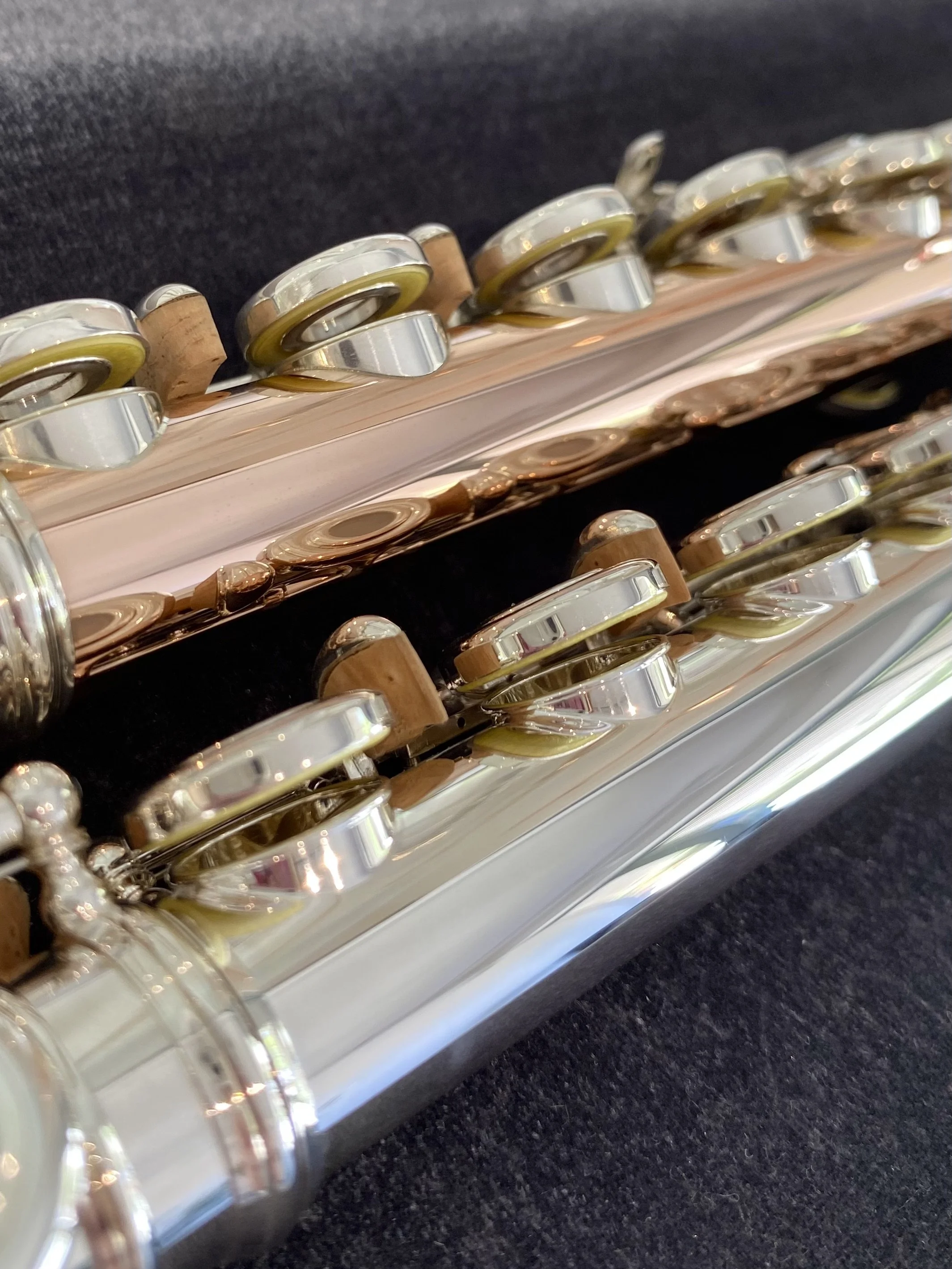
Soldered-tonehole flute (top) and drawn-tonehole flute (bottom)